

Lincoln County Fire Protection District #1
One of the things I have learned over the course of my career in the fire service is that leadership lessons are everywhere if you are willing to look for them.
Sometimes they come from formal training programs, leadership books, or mentors who intentionally shape our development. But more often than not, the most meaningful lessons come from places we never expected. A conversation in the hallway. A comment made in passing. A short moment with someone whose experience carries weight.
How often have we walked away from an interaction and thought, “That was nice,” or “That made me think,” or occasionally even, “That changed the way I look at things.”
Leadership in the fire service has a way of unfolding like that. You spend years learning the job, developing your skills, and gaining experience. Just when you think you have things figured out, something happens that reminds you there is still far more to learn. In fact, the moment you start to believe you have all the answers is usually the moment you are reminded how much you still do not know.
That realization has shaped how I approach learning in this profession. The lessons are everywhere, but they are easy to miss if we are not paying attention. Every training event, every conversation, and every chance encounter can hold something valuable.
When I attend training events with firefighters and officers from across the country, I am always struck by how similar our challenges are. Departments may be different in size or location, but the issues we face often sound remarkably familiar. Leadership struggles. Organizational culture. Personnel challenges. Balancing tradition with change.
It becomes clear that most of us are searching for the same answers, just at different points in our journey. The reality is we will never find all of them. Leadership is too complex and people are too unpredictable for that. But that does not mean we stop looking.
Sometimes the most valuable lessons appear in places we least expect.
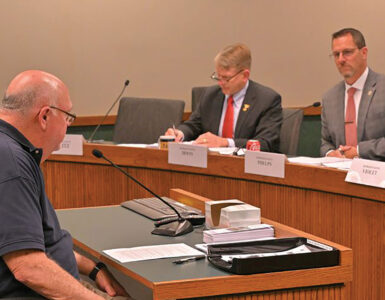
I experienced one of those moments during the Fire Service Leadership Enhancement Program through the University of Missouri Fire and Rescue Training Institute. Our class had the opportunity to attend Firefighters Day at the Missouri State Capitol. After a series of presentations from fire service leaders across the state, along with remarks from the Governor, we were given a tour of the Capitol building by Missouri State Fire Marshal Tim Bean.
The tour began in the committee rooms where legislation is debated and moved through the House and Senate chambers where decisions that affect our profession are ultimately made. Eventually, we climbed our way to the top of the Capitol dome.
For many of us it was simply an interesting tour of an impressive building. But during the climb I found myself walking near Fire Marshal Bean and decided to ask him a question that had crossed my mind.
“How does someone get to your position?” I asked it mostly out of curiosity. The State Fire Marshal is a significant leadership position within Missouri’s fire service, and I was interested in understanding what kind of career path might lead someone there.
He did not answer right away. Instead he paused and said, “Let me think about that for a moment.”
The tour continued. We moved through different parts of the building and eventually began our descent from the dome. At that point he and I happened to be walking toward the back of the group.
He turned to me and said, “I’ve thought about your question.”
His answer caught me a little off guard.
“I never intended to become the State Fire Marshal,” he said. “It was never a goal of mine. It just happened.”
That statement alone challenged an assumption many of us carry in our careers. We often believe every step upward must be carefully planned. Instead, what followed was a simple story about a career that developed through opportunities, relationships, and a willingness to step forward when the moment presented itself.
He talked about humble beginnings in the fire service. Like most of us, he started by doing the job and learning along the way. As he described the path his career took, one theme became clear. Opportunities had appeared throughout his career that could have easily been passed by.
Committee work. Assignments. Leadership roles. Chances to contribute in ways that extended beyond the basic expectations of the job.
Many firefighters encounter those opportunities at one point or another. The difference, he explained, was simply that he chose to take them.
He accepted the opportunity. He took the risk. He did the work necessary to make the most of the moment when it arrived.
What followed was a conversation that probably lasted no more than twenty minutes. By the time it ended though, I realized I had gained far more from that brief exchange than I expected.
When we reached the end of the tour, I thanked him for taking the time to answer my question. I also told him something else. “Whether you intended to or not,” I said, “you just gave me at least six leadership lessons in the last twenty minutes.”
Those lessons have stayed with me.
The first was humility.
Despite holding one of the most significant leadership positions in the state’s fire service, there was no ego in his story. There was no effort to highlight personal accomplishments or elevate his own importance. Instead he spoke plainly about doing the work and being open to opportunities when they appeared.
That kind of humility is often what separates leaders people respect from those they simply follow.
The second lesson was the value of relationships.
Throughout his explanation it became clear that relationships played a significant role in how his career unfolded. The fire service is a profession built on trust. The connections we build with other firefighters, leaders, and organizations shape opportunities in ways we often do not fully appreciate at the time.
People remember how you treat them.
They remember whether you show up when it matters.
Those relationships often become the bridge to future opportunities.
The third lesson was the importance of passing knowledge forward.
He took the time to think about a simple question from someone he had just met and then gave a thoughtful response. That willingness to share experience is one of the strongest traditions in the fire service.
Much of what we know about this profession comes from lessons handed down by those who came before us.
The fourth lesson was the reward of hard work.
There was no magic formula in his story. No shortcuts. Just consistent effort and a willingness to put in the work when the opportunity appeared.
The fifth lesson was the importance of simply showing up.
Sometimes leadership opportunities begin with something as simple as being present and engaged. Showing up for training. Participating in discussions. Volunteering when something needs to be done.
Those small moments often open doors that were never visible before.
And finally there was perhaps the most powerful lesson of all.
Make people feel valued.
In a busy day filled with speeches, events, and responsibilities, he took the time to stop, reflect on a question, and give a thoughtful answer. That small act made a lasting impression.
It reinforced something I believe deeply about leadership. You do not have to be on a stage to influence someone. You do not have to give a formal lecture.
Sometimes the most meaningful leadership lessons happen in short conversations, unexpected encounters, or brief moments when someone shares their experience.
The fire service is full of those moments. But they only matter if we are paying attention.
Because the truth is, the next lesson that shapes your career might not come from a textbook, a conference, or a classroom.
It might come from a twenty minute conversation in the stairwell of the Capitol with someone who simply took the time to answer a question.
And in the fire service, those small moments of mentorship are often the ones that carry the greatest weight.
 FFAM
FFAM